Experiencing a house fire can be overwhelming. Even when everyone is safe, homeowners are often left facing smoke, soot, water damage, damaged belongings, and uncertainty about what to do next. During this difficult moment, taking the right steps can help protect your property, reduce additional damage, and make the restoration process more manageable.
The first priority after any fire is personal safety. Do not enter the property until firefighters or local authorities confirm that it is safe. A building may appear stable from the outside while still containing weakened floors, damaged ceilings, exposed electrical wiring, hot spots, or toxic smoke residue. Waiting for professional clearance is essential.
Contact Your Insurance Provider
Once the immediate danger has passed, notify your insurance provider as soon as possible. Explain what happened and ask what documentation will be required for your claim. Your insurance representative may request photographs, videos, an inventory of damaged belongings, fire department reports, and restoration estimates.
Take detailed photos of every affected area before moving, cleaning, or discarding anything. Capture wide images of rooms as well as close-up photos of damaged furniture, walls, appliances, flooring, personal belongings, and structural materials.
Avoid throwing away damaged items until your insurance provider gives approval. Even belongings that appear completely destroyed may need to be documented during the claims process.
Secure the Property
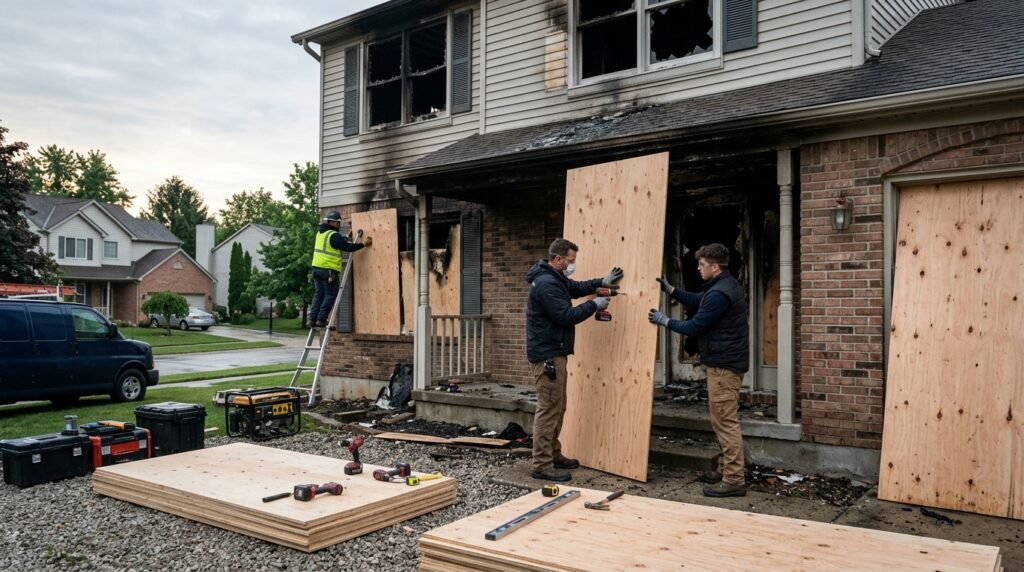
Fire damage can leave windows broken, doors damaged, roofs exposed, or walls partially open. These conditions may allow rain, wind, animals, or unauthorized individuals to enter the property.
Temporary emergency services such as board-up work, roof tarping, and structural stabilization can help protect the home from further damage. Securing the property quickly may also be required by your insurance policy.
Do not attempt to cover damaged roofs or unstable openings yourself. Fire-damaged structures can be dangerous, especially when ladders, loose materials, or weakened surfaces are involved.
Avoid Cleaning Smoke and Soot Yourself
It is natural to want to begin cleaning immediately, but improper cleaning can spread soot and make permanent stains worse. Soot is not ordinary dust. It may contain acidic particles, chemicals, and combustion residue that can damage walls, metal, glass, fabrics, electronics, and personal belongings.
Using household vacuums, wet cloths, or strong cleaning chemicals may push soot deeper into surfaces. Smoke residue can also irritate the eyes, skin, and respiratory system.
Professional fire damage restoration teams use specialized equipment and cleaning methods based on the type of material that burned and the surfaces that were affected.
Address Water Damage Quickly
Firefighting efforts often leave large amounts of water inside the property. Water may collect beneath flooring, inside walls, around insulation, and in areas that are difficult to see.
If the moisture is not removed promptly, it may lead to mold growth, warped flooring, damaged drywall, weakened building materials, and unpleasant odors. Fire restoration frequently includes water extraction, structural drying, dehumidification, and moisture monitoring.
Create an Inventory of Damaged Belongings
Begin making a room-by-room list of damaged items. Include furniture, clothing, electronics, appliances, documents, tools, decorative items, and personal possessions.
When possible, record the brand, model, approximate purchase date, and estimated replacement value. Receipts, photographs taken before the fire, online purchase records, and credit card statements may help support your claim.
The process can feel emotionally difficult, especially when sentimental belongings are involved. Take your time and ask for assistance when needed.
Find Temporary Housing and Essential Supplies
Depending on the severity of the fire, the home may be unsafe or uncomfortable to occupy. Your insurance policy may provide coverage for temporary housing, meals, clothing, transportation, and other necessary living expenses.
Keep receipts for every fire-related expense. Organizing these records in a folder or digital file can make the reimbursement process easier.
Begin Professional Fire Damage Restoration
Fire damage restoration is a detailed process that may include emergency board-up, water removal, structural drying, soot cleanup, smoke odor removal, contents cleaning, demolition, repairs, and reconstruction.
A qualified restoration team can inspect the property, identify hidden damage, create a restoration plan, and coordinate the necessary services. Acting quickly can help prevent smoke, soot, moisture, and odors from causing additional problems.
Recovering from a house fire takes time, but homeowners do not have to handle every step alone. By prioritizing safety, documenting the damage, securing the property, and requesting professional help, you can begin moving toward a clean, safe, and restored home.